Basics
How to order drinking water in Chiang Mai in 2026
Tap water here is very hard and nobody drinks it straight from the tap — this is how locals get drinking water, from bottles to refillable jugs and delivery.
By Delta
Drinking Water Essentials
Don't drink the tap water: It's too hard and will leave mineral buildup in your kettle.
Delivery is king: Most long-stayers order 18.9L jugs for about 35 THB.
Initial cost: Expect a 100-200 THB bottle deposit on your first order.
How to order: Use building management for convenience, or contact companies directly via LINE/Facebook for better service.
Living here for more than a few days, I quickly learned that drinking water is its own small system. This guide covers the usual options and the setup I and most long-stay residents use.
Why can't I drink tap water in Chiang Mai?
Tap water in Thailand is very hard. I almost never drink it untreated. If you boil it in a kettle, you will soon see a thick white mineral buildup on the bottom. Even after boiling it tends to taste flat and chalky — for both taste and peace of mind, it is better not to rely on tap water for drinking.
What are the best ways to get drinking water?
Supermarkets and convenience stores
I used to buy large bottles at 7-Eleven or a supermarket, but I found:
- Heavy: Those bottles are heavy to carry home, especially if you are on foot.
- Waste: Even if you use Grab or another delivery service, you still burn through a lot of single-use plastic over time.
How to book water like a local
If you do not want to haul water from the shop every day, the cheaper and more sustainable move I recommend is to order from a water delivery company.
The standard size is about 18.9 L in a returnable hard plastic bottle. Refills are often around 35 THB per bottle (prices move with the brand and area).
On your first order you pay a bottle deposit, which you get back when you return the empties. Deposits are often roughly 100 THB for the large bottle; smaller setups are sometimes 200 THB or more.
Day to day: Leave the empty bottle where the driver expects it; they swap in a full one on the round, then leave a slip or collect payment on the spot.
I've found you can set this up in two main ways:
Option A: Order through building management
Turmlap GR is one example — I first got this through a condo's juristic office, and it's a brand many Thai households in Chiang Mai use.
- Pros: You only talk to staff you already know.
- Cons: You are usually stuck with one brand the building uses.
- Cons — timing: Delivery depends on how well the office communicates with the company. If someone forgets to pass the message, your refill can silently slip by a day or more.
- Cons — deposits: Getting your deposit back also goes through the office. Slow follow-up or lost paperwork can drag refunds out or block them entirely.
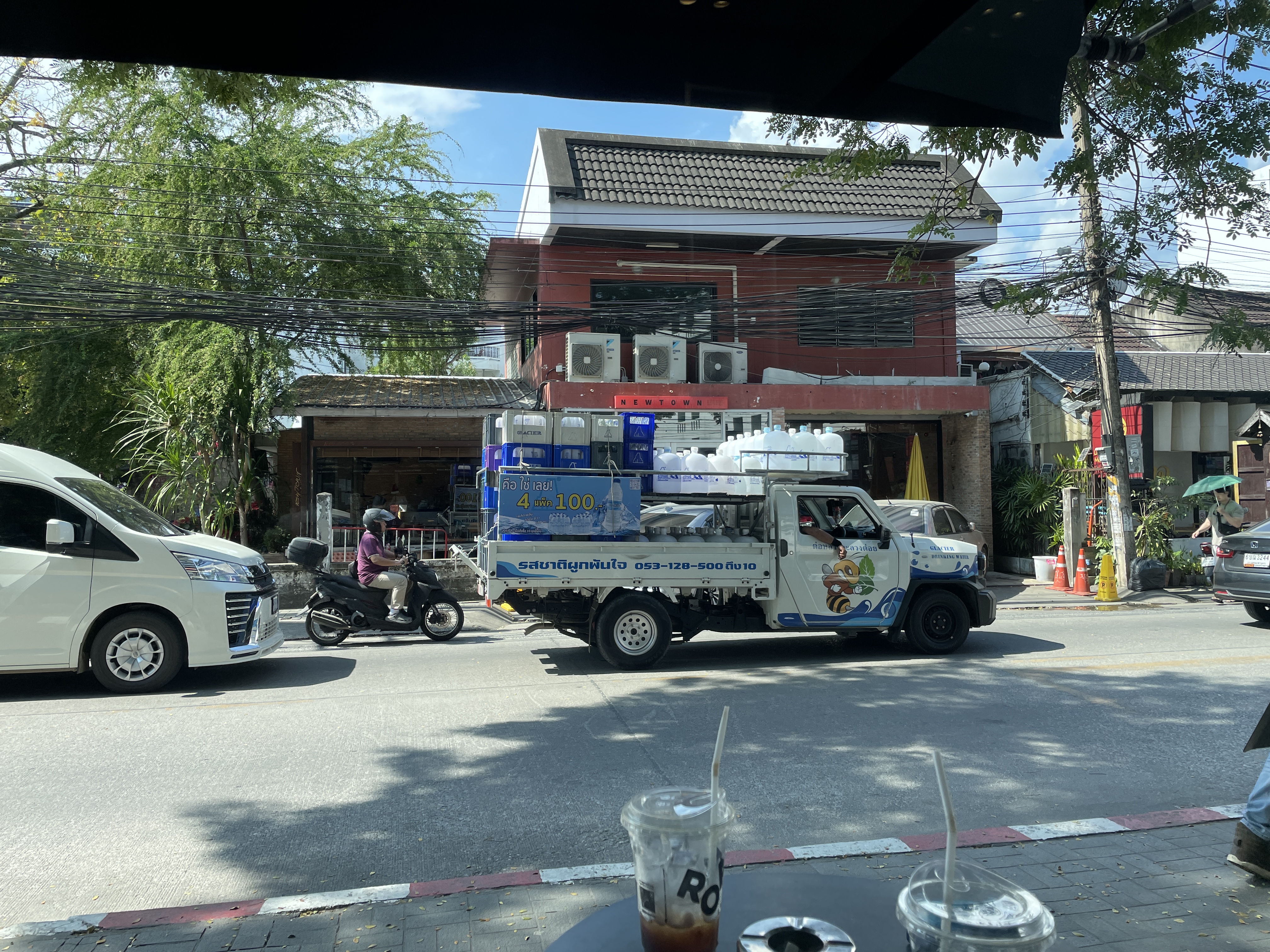
Option B: Contact the water company yourself
Skip the middle layer and reach the brand on Facebook or by phone.
- Phone: If you can manage a little Thai, calling the local number is often the fastest path.
- Online (English-friendly): Some brands answer on Facebook or LINE. Support is often comfortable in English, and you can sort scheduling and PromptPay payment on your phone with a clear paper trail.
Dew Drop Drinking Water is who I use now — I book weekly through their Facebook page; after the first order they give you a deposit receipt, which makes the whole thing feel properly documented. Payment is straightforward — I just TrueMoney transfer to them after each delivery. Free delivery across Chiang Mai, and their trucks are easy to spot around town.
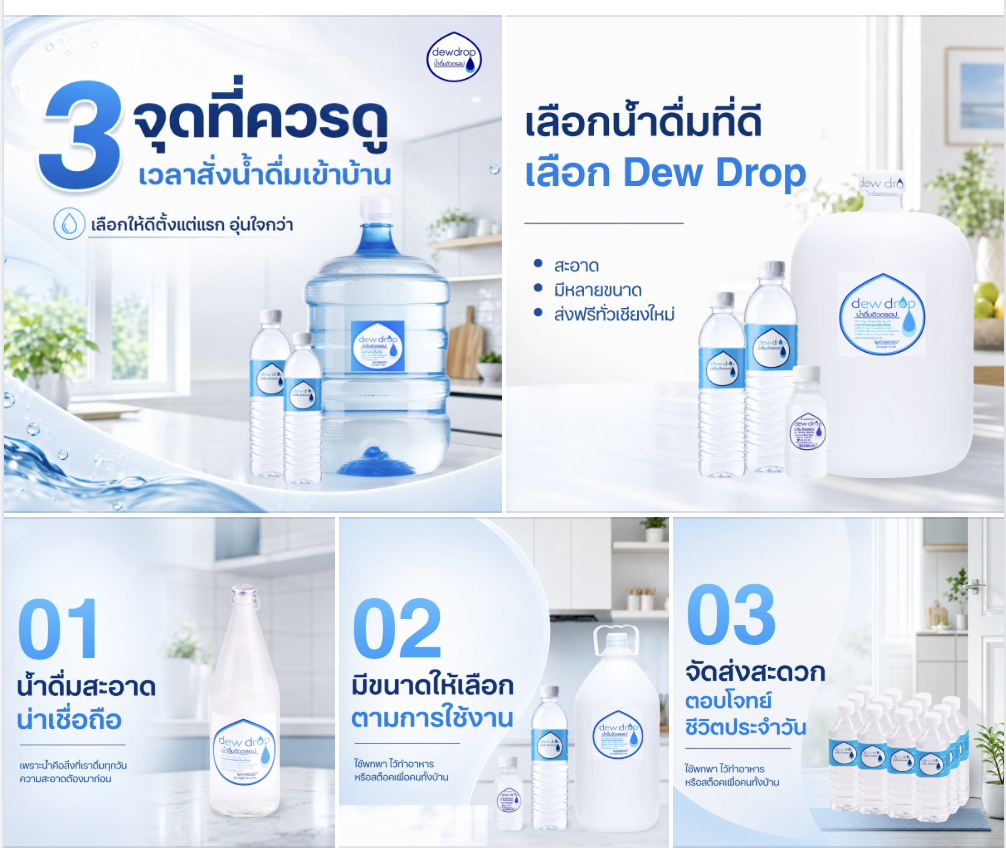
- Pros — money: You pay the deposit directly to the supplier, so refunds are usually more straightforward.
- Pros — choice: You can pick a company with better reviews or more reliable routes.
If you are only in town for a month or two, going through building management saves you the hunt for numbers and accounts — just confirm how and when you get your deposit back with the office about a week before you move out.